Loading artist
Loading artworks

Biography
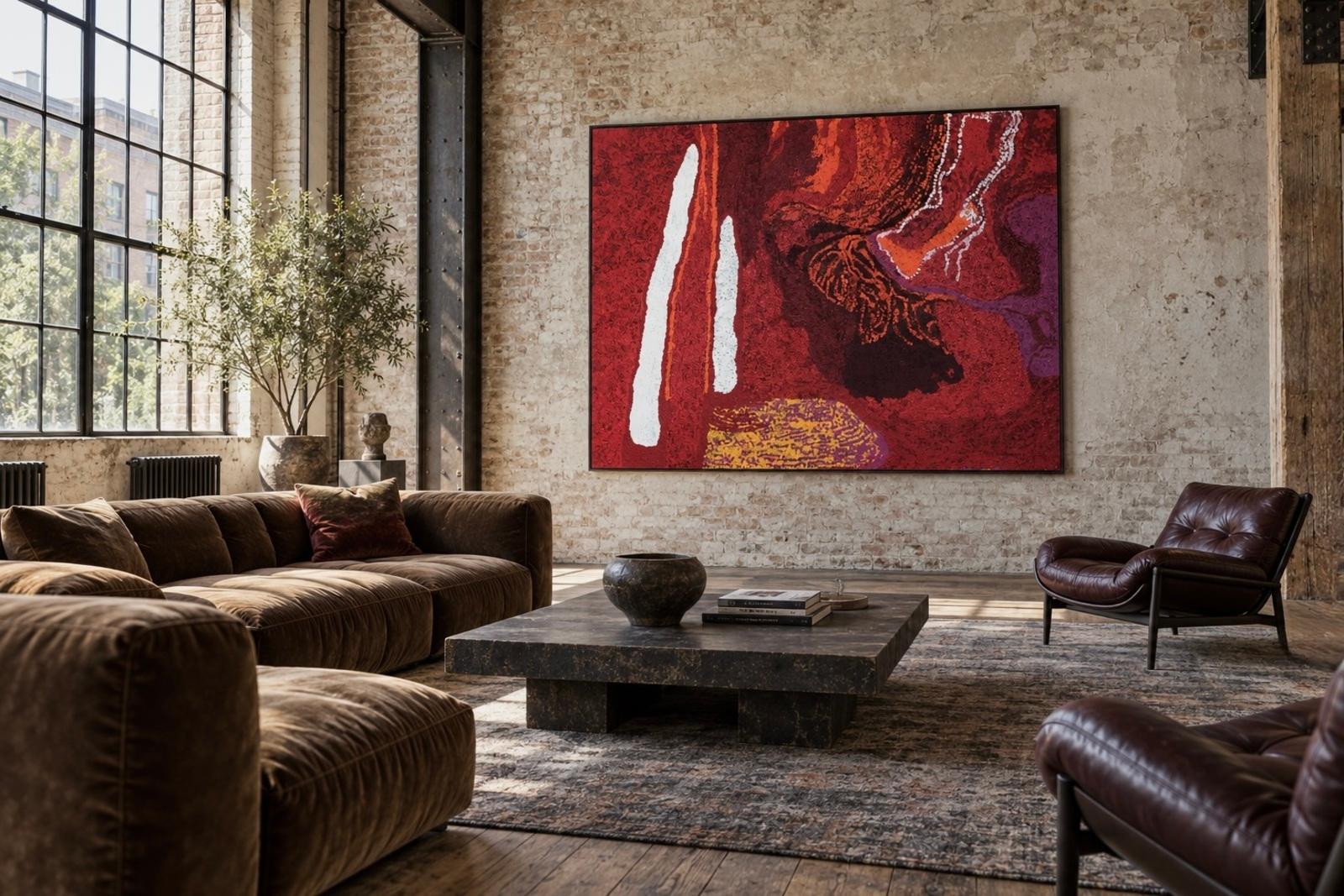
Pitjantjatjara, c. 1935–2017 Yannima Pikarli Tommy Watson was a senior Pitjantjatjara artist and law man from Anumarapiti, west of Irrunytju in Western Australia. He grew up travelling across desert Country, learning its water sources, ancestral places and cultural Law through family. Tommy began painting through Irrunytju Arts in the early 2000s and became one of the most distinctive colourists in contemporary Western Desert painting. Country: Anumarapiti and Irrunytju Tommy’s paintings are associated with his mother’s and grandfather’s Country around Anumarapiti and Irrunytju, near the meeting point of Western Australia, South Australia and the Northern Territory. His works carry knowledge of ancestral sites, rockholes, journeys and Tjukurrpa held through place and memory. Rather than describing Country literally, the paintings translate its presence through colour, rhythm and shifting fields of movement. Style and Technique Tommy’s paintings are dense, luminous and highly intuitive. He built his surfaces through repeated dotted marks, layered colour and loosely defined forms that expand, overlap and recede. Large areas of the canvas may appear atmospheric and abstract, while clusters of marks suggest the energy of particular sites and pathways through Country. His compositions are rarely static; colour and movement seem to travel continuously across the surface. Tommy’s Palette Tommy is known for an intense palette of red, orange, yellow, pink, purple, blue, black and white. Colours are often layered closely together, creating depth, heat and visual vibration. His strongest works balance saturated colour with darker passages and open areas, allowing individual forms to emerge from the broader field. For the Collector Yannima Pikarli Tommy Watson is recognised as a major figure in contemporary Western Desert art. His work is held in significant Australian public collections, including the National Gallery of Australia, National Gallery of Victoria and Art Gallery of New South Wales. His 2005 work Wipu Rockhole also forms part of the permanent Indigenous Australian architectural commission at the musée du quai Branly–Jacques Chirac in Paris.
Artworks