Loading artist
Loading artworks

Biography
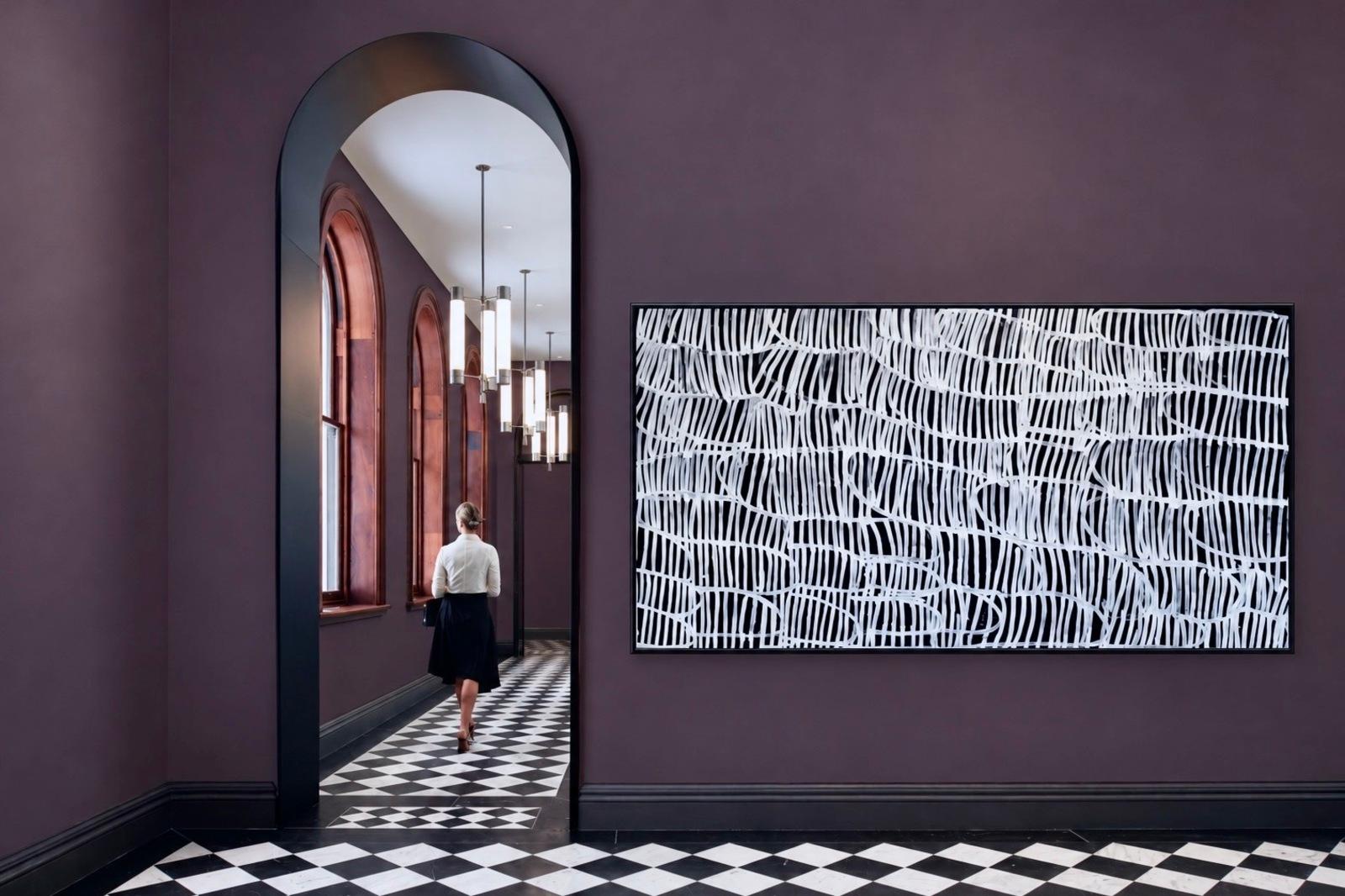
Studio Australis acknowledges that the artist referenced below has passed and respectfully recognises the Aboriginal cultural protocols observed by many communities regarding the naming of deceased persons. To ensure consistency with certificates of authenticity, museum records and published references, Studio Australis continues to use the artist's most widely recognised professional name. Anmatyerre/Alyawarr, c. 1910–2006 Minnie Pwerle was a senior Anmatyerre/Alyawarr artist from Atnwengerrp in the Utopia region of the Northern Territory. Her life was grounded in Country, family and women’s ceremonial practice. She began painting on canvas around 2000, late in life, and during a remarkably brief career developed a powerful visual language drawn from Awelye, bush foods and the cultural knowledge of Atnwengerrp. Country: Atnwengerrp Minnie’s paintings are associated with Atnwengerrp, near the Sandover River north of Utopia. Her principal subjects include Awelye Atnwengerrp—women’s ceremony and the body-paint designs used during ceremony—as well as the bush melon and its seed. Through these subjects, her paintings connect women’s knowledge, ceremonial practice, food and Country. Style and Technique Minnie’s paintings are immediate, rhythmic and intensely physical. Broad looping lines, parallel bands and rounded forms move freely across the canvas, often layered over dense fields of colour. The linear works recall designs painted on women’s bodies during ceremony, while circular and gestural forms are associated with bush melon stories. Her compositions are rarely rigid or tightly controlled; their strength lies in repetition, movement and confident mark-making. Minnie’s Palette Minnie worked with black, white, red, ochre, orange, yellow, pink, purple, blue and green. Some paintings use stark black-and-white contrasts, while others combine saturated colour in energetic, overlapping layers. Colour is handled boldly, creating a strong sense of movement and ceremonial intensity. For the Collector Minnie Pwerle is recognised as one of the most significant artists to emerge from Utopia. Although she painted on canvas for only approximately six years, she produced a distinctive and immediately recognisable body of work. Her paintings are held in major Australian public collections, including the Queensland Art Gallery | Gallery of Modern Art and the Art Gallery of Western Australia. Minnie’s work remains an important expression of Atnwengerrp Country, women’s ceremony and the vitality of late twentieth- and early twenty-first-century Utopia painting.
Artworks